

How long should you keep a face mask on to fully benefit from it?

The question seems simple, but the answer depends on the type of mask, its texture, its active ingredients, and your skin's needs. Leaving it on for too long can dry out the epidermis, while too short a time reduces the treatment's effectiveness. The right balance allows the cosmetic product to act deeply, providing radiance, hydration, or purification without irritating the skin.
Whether it's a sheet mask, a cream mask, or a nourishing organic balm, each formula has an indicated application time that must be respected to avoid the opposite effect: tightness, dryness, or excess sebum. Rich textures, such as those of hydrating masks, require a longer time to allow active ingredients (hyaluronic acid, plant oils, soothing agents) to penetrate and smooth the skin. Purifying masks with clay or charcoal, however, should be removed before they dry completely.
In this article, we will discuss when to apply a mask, how many minutes to leave it on, how to integrate it into a natural beauty routine, and how to avoid mistakes that limit the treatment's effectiveness.
Understanding why application time is essential
The role of time in active ingredient absorption
The application duration directly influences the skin's ability to absorb the active ingredients contained in the mask: moisturizers, purifiers, radiance boosters, anti-aging agents, etc. Slightly damp skin just before applying a mask allows for better penetration and lets the cosmetic ingredients act deeply.
Too short a time does not allow the treatment to diffuse properly, while too long a time can unbalance the hydrolipidic film.
The importance of respecting the indicated application time
Each mask has an indicated application time established according to the concentration of ingredients, their mode of action, and their evaporation potential.
Example:
-
a hydrating cream mask requires 10 to 20 minutes.
-
a clay mask must be removed before it dries.
-
a Korean sheet mask should never exceed 20 minutes to avoid the opposite effect (the sheet begins to reabsorb moisture from the skin).
When the skin feels tight, stings, or seems drier than usual, it means the mask was left on for too long. To learn more about how shiny skin behaves with over-application, you can consult our dedicated article on shiny skin.
Risks associated with leaving it on for too long
Contrary to popular belief, leaving your mask on "until it dries" is not good practice. This can:
-
dry out the skin,
-
cause a feeling of discomfort,
-
create redness,
-
on the contrary, stimulate excess sebum,
-
make it difficult to apply cream or foundation afterward.
This applies to both purifying and hydrating masks. Only masks specifically designed for long application can remain for up to 25–30 minutes thanks to their balm texture which never dries.

Understanding the differences by mask type
Hydrating masks (cream, gel, balm)
Hydrating, nourishing, or soothing masks contain rich textures, often formulated with active ingredients like hyaluronic acid, plant oils, or restorative agents.
They generally require 10 to 20 minutes, sometimes up to 30 minutes depending on the formula.
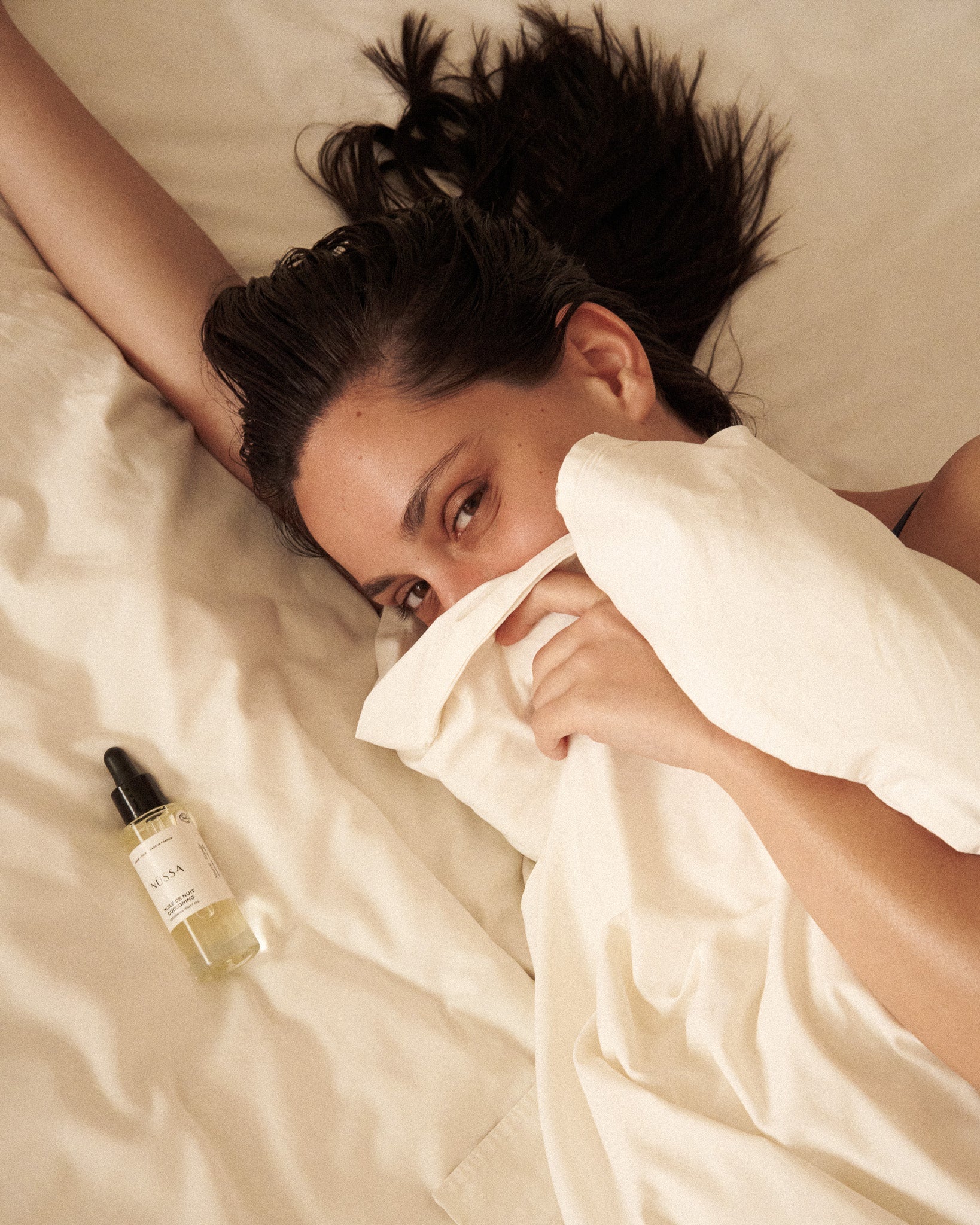
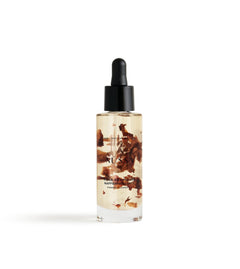
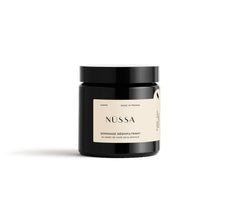
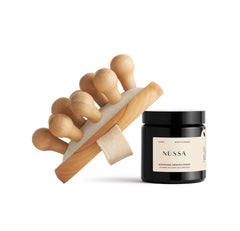
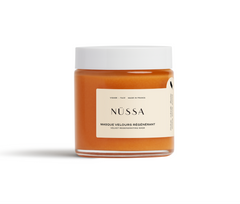
The Nüssa regenerating hydrating balm mask is a typical example of a mask designed to work comfortably without ever tightening, providing intense hydration and a smoother complexion.
Purifying masks (clay, charcoal, gentle exfoliants)
Purifying masks must be handled with precision:
-
Clay: 5 to 10 min (never let dry)
-
Charcoal: about 10 min
-
Enzymatic masks: 3 to 7 min maximum
Clay or charcoal are effective for absorbing excess sebum and decongesting pores, but can dry out if left on longer than the recommended time.
Sheet masks
The sheet mask is designed to stay on for between 15 and 20 minutes, never more. Beyond that, the saturated sheet begins to lose its moisture, and in an inverse evaporation phenomenon, it can reabsorb hydration from the epidermis.
To optimize its effectiveness, apply a serum afterward, which you can find in our guide how to apply a serum.

Application time by skin type
Dry skin
Dry skin lacks lipids and absorbs active ingredients slowly. It can therefore tolerate slightly longer application times, but always with textures that never dry.
-
Hydrating mask: 10–20 min
-
Balm mask: up to 30 min
-
Sheet mask: 15 min
Avoid purifying masks that are too short or too long, as they can exacerbate dryness. To strengthen the skin barrier, a natural routine can effectively complement your ritual.
Combination or oily skin
Oily or combination skin reacts quickly to excess: too much time = too much sebum.
-
Clay: 5–10 min (never dry)
-
Charcoal: 10 min
-
Hydrating masks: 10–15 min
-
Sheet mask: 15 min
Exceeding the time can cause a rebound of shine, as explained in our guide dedicated to shiny skin.
Sensitive skin
Sensitive skin requires gentle application times and careful monitoring.
-
Soothing hydrating masks: 10–12 min
-
Soothing / repairing masks: 10–15 min
-
Enzymatic exfoliants: 3–5 min
-
Purifying masks: maximum 5 min
At the slightest tingling, remove immediately. A hydrating treatment like a hydrating face mask can help soothe.
Dull or tired skin
Dull skin requires precision and radiance.
-
Gentle exfoliants: 5–7 min
-
Radiance hydrating masks: 10–15 min
-
Radiance sheet masks: 15–20 min
To maximize the result, apply a serum afterward. In case of tightness or lack of radiance, refer to dehydration treatments.

Summary table: Application time by skin type
| Skin type | Hydrating mask | Purifying mask (clay/charcoal) | Sheet mask | Gentle exfoliant |
|---|---|---|---|---|
| Dry skin | 15–20 min | 5 min (rarely) | 15 min | 5 min |
| Combination / oily skin | 10–15 min | 5–10 min | 15 min | 5–7 min |
| Sensitive skin | 10–12 min | 5 min max | 10–12 min | 3–5 min |
| Dull / tired skin | 10–15 min | 5–8 min | 15–20 min | 5–7 min |
Signs that you need to remove a mask immediately
Even if you follow the indicated application time, certain signs show that you need to remove the mask without delay to avoid irritating the skin. A mask (whether cream, gel, clay, anti-pollution sheet, or collagen mask) should always remain pleasant and maintain a minimum of moisture on the face. As soon as the product becomes uncomfortable, application should be stopped, whether during the day or as part of a night treatment.
Signs to watch for:
-
Tingling, burning, tightness: the skin reacts to the concentration of active ingredients, especially near the eye contour.
-
Drying mask: when a texture starts to pull or become rigid, it risks drying out the epidermis.
-
Redness or irritated areas: some sensitive skin reacts faster, even with a mask used correctly.
-
Sheet mask almost dry: past a certain stage, it reabsorbs moisture from the skin, reducing the mask's effectiveness.
-
Change in odor or abnormal texture: a sign of poor storage, an expired, or altered product.
The rule is simple: as soon as a mask is no longer comfortable to apply to your face, you must rinse it off immediately. It is better to shorten the application than to damage the skin's protective film, especially if it is sensitive, dehydrated, or reactive.

FAQ: All about face mask application time?
What is the shelf life of a mask?
The shelf life of a mask depends on its formula and format. A face sheet mask should be used immediately after opening: it cannot be stored. A mask used in a jar or tube generally lasts between 6 and 12 months after opening, according to the storage duration indicated on the packaging of beauty products. Sheet masks and surgical masks have an expiration date marked on the sachet: beyond that, the mask's preservation is no longer guaranteed. It is recommended to use each product within its timeframe to ensure its effectiveness and avoid any skin reaction.
Can you wear a mask all night?
Generally no. Wearing your mask for too long can irritate the skin, as it does not need prolonged exposure. Only masks specifically designed as overnight treatments should be left on all night. Classic masks (purifying, cream, gel, or sheet mask) should be removed once the indicated time has elapsed to preserve the mask's effectiveness and adhere to the skincare routine. To know if a mask can stay on longer, always refer to the "overnight mask" label.
How to apply a face mask?
To apply a mask effectively, start with a gentle cleanse, then apply the mask in a thin layer to clean skin. Adapt the technique according to the type of mask: a sheet mask should perfectly fit the contours of the face, while a cream mask should be spread evenly from the forehead to the chin. Follow the face mask advice on the cosmetic product, avoid the eye contour area, and adhere to the indicated application time in your skincare routine.
What type of mask should I choose?
The choice depends on your skin's needs.
-
A hydrating mask to provide comfort and suppleness.
-
A purifying mask to absorb excess sebum.
-
A collagen mask to smooth and plump.
-
A Korean sheet mask for rapid hydration and an instant fresh effect.
Face masks come in many forms: the essential thing is to choose a mask adapted to your skin type and your beauty goals.
Mastering application time to transform your mask routine
To go further, also adapt your mask frequency per week according to your skin type, explore techniques to firm your face skin, and choose natural skincare products capable of nourishing, soothing, and revitalizing your epidermis long-term. If your skin lacks water or has a dull complexion, rituals dedicated to dehydration will help you regain suppleness and radiance.
Taking care of your skin means understanding its rhythm, respecting its limits... and giving it the right amount of attention, at the right time. With adapted rituals, each mask becomes more than a beauty gesture: a true regenerating treatment dedicated to comfort and radiance.

Written by Nüssa Cosmetics