



Blue light and skin: what are the real effects and how to protect yourself naturally?

You spend an average of 6 hours a day in front of a screen: computer, smartphone, tablet. Add to that daily sun exposure, even on cloudy days. Blue light has become one of the most constant, yet least visible, skin aggressors of our time.
Oxidative stress, hyperpigmentation, skin laxity, sleep disturbance... the effects of blue light on the skin are documented by dermatological research. But between alarmist articles and marketing rhetoric, it's hard to distinguish real risks from exaggerations.
In this guide, we'll review what science truly says, including proven effects, biological mechanisms, and the most exposed skin types. We'll also provide a concrete routine to protect yourself naturally every day.
What is blue light?
Blue light is a portion of the visible light spectrum, ranging from 380 to 500 nanometers, with a peak danger zone around 415-455 nm. It is also known as HEV light (High Energy Visible) or HEVIS light (High Energy Visible Light). It is characterized by high energy and a short wavelength, giving it a strong skin penetration capacity, deeper than UVA and UVB.
Natural blue light vs. screen blue light: what's the difference?
It's essential to distinguish between the two main sources:
- The sun is by far the most intense source of blue light. It emits 100 to 1,000 times more HEV light than any screen.
- LED screens (smartphones, computers, tablets) emit less intense blue light, but exposure is daily, prolonged, and often at night, when the skin is no longer in "defense" mode.
The real issue with screens, therefore, is not so much their light intensity as the cumulative duration of exposure and the timing of this exposure, especially in the evening.
HEV, HEVIS, High Energy Visible Light: a note on terminology
These terms all refer to the same reality: the portion of the visible spectrum just beyond UVA. Unlike ultraviolet light (invisible to the naked eye), blue light is visible; it's literally the bluish light from LED neon signs, screens, and daylight on a clear sky. It doesn't cause immediate redness like a sunburn, which is why its effects go unnoticed for so long.

What are the effects of blue light on the skin?
Dermatological research has identified several mechanisms by which blue light damages the skin. These effects are not immediate; they accumulate over the long term, as is the case for all photoaging factors.
Oxidative stress and free radicals: the main mechanism
When HEV light penetrates the layers of the epidermis and dermis, it triggers the production of reactive oxygen species (free radicals). These unstable molecules attack cell membranes, keratinocyte DNA, and protein support fibers. This is oxidative stress.
The result: skin cells age prematurely, the skin barrier weakens, and the skin's natural repair mechanisms are overwhelmed. A study published on PubMed (Nakashima et al., 2017) confirms that blue light generates more free radicals than UVA at equal intensity in the superficial layers of the epidermis.
Accelerated skin aging: collagen, elastin, wrinkles
The oxidative stress induced by blue light has a direct impact on collagen and elastin, the two proteins responsible for skin firmness and elasticity. Their accelerated degradation results in:
- The appearance of early fine lines and wrinkles, especially around the eyes and on the forehead, the areas most directly exposed to screens
- Progressive skin laxity
- A dull complexion and loss of radiance
- Skin that appears more "tired" over the years
If you're already noticing dehydration fine lines that are worsening despite good hydration, chronic exposure to blue light can be an often-overlooked aggravating factor.
Hyperpigmentation: who is most at risk?
Blue light activates a receptor present in melanocytes called melanopsin (opsin). This activation triggers a cascade of signals that stimulates tyrosinase, the enzyme responsible for melanin synthesis. In short: blue light causes hyperpigmentation that can manifest as:
- Brown spots or "age spots" on the face
- Darkening of existing melasma
- Persistent uneven skin tone
An important specific feature: unlike UVB, where pigmentation is temporary, blue light-induced hyperpigmentation is darker and more lasting. Phototypes III to VI (medium, olive, dark skin) are significantly more susceptible.
The indirect effect: disturbed sleep = skin that doesn't recover
The blue light emitted by screens in the evening inhibits the secretion of melatonin, the hormone that regulates the sleep-wake cycle. It is during deep sleep phases that the skin enters repair mode: cell renewal, collagen production, toxin elimination, regeneration of the hydrolipidic barrier.
Screen exposure within 2 hours before bedtime delays falling asleep and reduces sleep quality, with very concrete skin effects: dark circles, dull complexion in the morning, less toned and plump skin.

Which skin type is most vulnerable to blue light?
All skin types are affected, but two profiles show increased vulnerability:
Darker phototypes (III to VI)
Paradoxically, naturally more pigmented skin, often presented as "better protected" from the sun, reacts more strongly to blue light in terms of hyperpigmentation. Melanopsin is more active in the melanocytes of higher phototypes, which amplifies the pigmentary response to HEV exposure. If you have medium or dark skin and notice persistent spots or irregularities, blue light should be identified as a triggering or aggravating factor.
Sensitive and reactive skin
Skin with a weakened skin barrier, such as sensitive, reactive skin prone to rosacea or eczema, offers less resistance to free radicals generated by HEV light. The altered hydrolipidic film allows oxidative aggressors to penetrate more easily. These skin types particularly benefit from an enhanced antioxidant routine, both protective in the morning and restorative in the evening.
Daily protection against blue light
The good news: you don't need to ban screens from your life to protect your skin. Simple adjustments are enough to significantly reduce exposure and strengthen your skin's natural defenses.
Limit exposure, without disrupting your habits
- Activate night mode or blue light filter on your devices from 7 PM; it shifts the spectrum towards warm orange tones.
- Increase the distance between your face and your screen: at 50 cm (about 20 inches), the intensity of blue light significantly decreases.
- Apply the 20-20-20 rule: every 20 minutes, look at an object 20 feet away for 20 seconds; both your skin and eyes will benefit.
- Turn off screens at least 30 to 60 minutes before sleeping.
Apply SPF sunscreen in the morning, even indoors
Broad-spectrum sunscreen remains the most effective blue light protection. Daylight, even filtered through a window, contains UV and HEV light. An SPF 30 or 50 cream applied every morning, even if you don't go outside, provides a first shield against overall photoaging.
Prefer mineral filters containing iron oxides
Classic chemical filters primarily protect against UV. Only iron oxides (mineral pigments present in some tinted creams and sunscreens) have demonstrated real effectiveness against HEV visible light. If you are particularly concerned about hyperpigmentation or chronic screen exposure, opt for a sunscreen or mineral foundation enriched with iron oxides.

Natural blue light anti-aging ingredients to integrate into your routine
Beyond physical protection, certain active ingredients work by neutralizing free radicals already generated by HEV light exposure. These are antioxidants, and nature provides very powerful ones.
Vitamin C: the reference antioxidant
Vitamin C (ascorbic acid) is the most well-documented antioxidant in dermatology. It neutralizes free radicals before they attack collagen, stimulates the synthesis of new collagen fibers, and has a brightening action that counteracts blue light-induced hyperpigmentation. A plumping antioxidant serum applied in the morning under your sunscreen is the most effective protective duo against HEV light.
Niacinamide: anti-spot and barrier protector
Niacinamide (vitamin B3) works on two fronts against blue light: it reduces melanin transfer to keratinocytes (thus diminishing spots), and it strengthens the hydrolipidic film, making the skin less permeable to oxidative aggressions. It is particularly recommended for hyperpigmented-prone skin and darker phototypes.
Vegetable oils rich in polyphenols and tocopherols
Certain vegetable oils are naturally rich in fat-soluble antioxidants:
- Argan oil, rich in vitamin E (tocopherol) and squalene, strengthens the lipid barrier and fights cellular oxidation.
- Rosehip oil, a source of beta-carotene (provitamin A), promotes cell renewal and reduces the effects of photoaging.
- Pomegranate oil, contains punicic acid, a unique fatty acid with exceptional regenerating and anti-radical properties.
Astaxanthin and green tea: niche antioxidants
Astaxanthin, a natural pigment extracted from microalgae, is considered one of the most powerful antioxidants known, up to 6,000 times more active than vitamin C against certain types of free radicals. Green tea (EGCG, epigallocatechin gallate) also possesses documented anti-inflammatory and antioxidant properties for skin exposed to UV and HEV light. These two active ingredients are starting to appear in high-end formulations and represent a real differentiator in product selection.
Blue light anti-aging routine: morning and evening
Effective protection against blue light relies on two complementary steps: protecting in the morning, repairing in the evening.
Morning: the antioxidant shield
- Gentle cleansing, without destroying the natural hydrolipidic film.
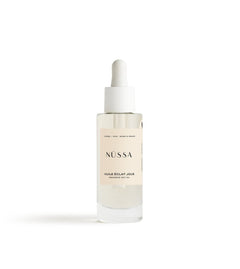
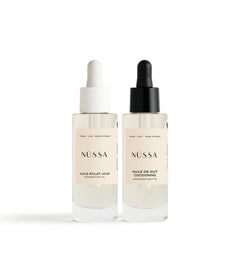
- Antioxidant serum, based on vitamin C or antioxidant active ingredients: this is the key step in protecting against daily free radicals. Our plumping serum is used here, on clean and slightly damp skin.
- Moisturizing care, to strengthen the skin barrier.
- SPF 30 or 50 sunscreen, ideally tinted with iron oxides, even if you stay indoors.
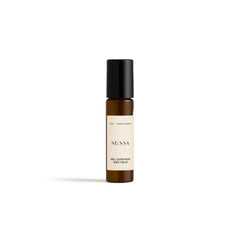
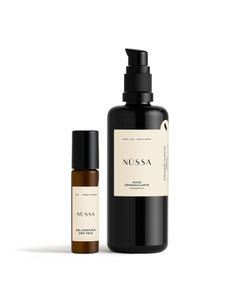
- Eye contour care: the periorbital area is the first to be exposed to screens and has the thinnest skin on the face. Our eye contour gel helps preserve radiance and reduce signs of fatigue.
Evening: nocturnal repair
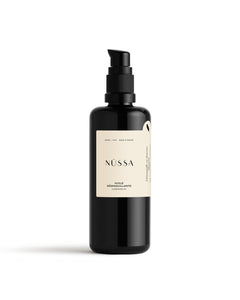
- Double cleansing if you wear sunscreen or makeup: a makeup remover oil as the first step to dissolve residues, then a gentle cleanser.
- Repairing serum or oil, rich in regenerating active ingredients (retinol, rosehip oil, vitamin A) to stimulate nocturnal cell renewal.
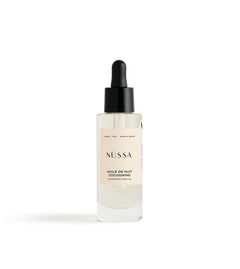
- Nourishing night care: our night care range is formulated to support natural repair during sleep: cell renewal, collagen restoration, deep hydration.
- Turn off screens 30 to 60 minutes before sleeping, so that melatonin can be secreted and the skin can fully enter its regeneration cycle.
To learn more about building a complete anti-aging routine, discover our guide how to firm facial skin naturally.