


What is cellulite? Mechanisms, types, causes, and real solutions

You look at your thighs, your buttocks, your stomach, and you see that irregular texture that looks like orange peel. You've tried cream, massage, diet, maybe even a few sessions at an aesthetic clinic. And yet, cellulite is still there. It's not a lack of willpower. Nor is it an inevitability. It's a complex skin phenomenon that affects over 85% of women, regardless of their height, weight or physical activity.
This common condition that affects subcutaneous adipose tissue has precise causes: hormonal factors, poor blood and lymphatic circulation, genetics, diet, and fat storage in the hypodermis. Understanding what's really happening beneath the skin's surface is the first step towards choosing effective solutions and lastingly reducing its appearance. This article gives you all the information you need to finally understand it.
What cellulite really is
Cellulite is not a disease, nor an accumulation of toxins, nor a sign of poor hygiene. It is a structural modification of the subcutaneous adipose tissue that occurs, to varying degrees, in almost all female bodies.
The biological mechanism, step by step
Under the skin are fat cells called adipocytes, organized into lobules and held in place by connective tissue septa. In women, these septa are oriented vertically, like columns. When adipocytes swell due to hormonal, nutritional or circulatory factors, they press on these septa and create a visible dimpling effect on the surface: this is the characteristic "orange peel" texture.
This phenomenon is almost absent in men, whose septa are oriented in a cross, which distributes the pressure differently. This anatomical difference explains why cellulite is primarily a female condition, regardless of the person's weight or slimness.
The central role of microcirculation
What is often overlooked is that cellulite is not just about fat. Microcirculation plays a fundamental role. When the small capillaries that irrigate the subcutaneous tissue malfunction, interstitial fluid stagnates, nutrient exchange slows down, and adipocytes struggle to release their reserves. Cellulite then becomes a circulatory phenomenon as much as an adipose one, which radically changes the solutions to consider.

The three types of cellulite: how to identify yours
Not all cellulite is alike. Distinguishing the types helps choose approaches that are truly adapted to your situation.
Adipose cellulite
This is the most common form. It gradually appears on the thighs, hips, buttocks and sometimes the stomach. It is only visible when pinching the skin, is not painful to the touch, and its consistency is soft. It is often associated with weight gain or prolonged sedentary lifestyle. Adipose cellulite responds well to regular mechanical stimulation and improved local circulation activation.
Edematous cellulite
This form is linked to poor lymphatic circulation and water retention. The skin appears swollen, the legs feel heavy, and the affected areas may leave a slight indentation under finger pressure. It fluctuates according to the menstrual cycle, heat, prolonged sitting or salt intake. It worsens at the end of the day and improves after a night lying down. This is often the cellulite of slender women who wonder why they have it despite everything.
Fibrous cellulite
This is the oldest and most resistant form. The skin is hard to the touch, often painful when pinched. The septa have thickened over time, forming adhesions that fix the adipocytes in place. It is often located on the sides of the thighs and responds little to superficial approaches. Working on the fascia and deep tissues becomes essential here.
Self-diagnosis test: identify your type in 30 seconds
Pinch the skin between your thumb and forefinger on the outer thigh.
If the "orange peel" texture only appears when pinching: early-stage cellulite, probably adipose.
If the texture is visible without pinching, and the skin is soft and swollen: edematous cellulite with a circulatory component.
If the texture is visible without pinching, and the skin is firm, lumpy, or painful: established fibrous cellulite.
It is common to have two types depending on the body areas.

The real causes of cellulite
Genetics and hormones: the foundation on which everything rests
Genetic predisposition largely determines the distribution of adipocytes and the density of connective tissue. If your mother or grandmother has pronounced cellulite, you are statistically more likely to develop it, and in similar areas.
Estrogens play a central role. They promote fat storage in gynoid areas (thighs, hips, buttocks) and increase capillary permeability, which facilitates water retention in tissues. This is why cellulite often appears at puberty, intensifies during pregnancy, and can evolve during menopause.
The menstrual cycle: an often overlooked factor
Hormonal fluctuations during the cycle have a direct and visible impact on cellulite. During the luteal phase, progesterone levels drop while estrogen levels remain high. This combination promotes water retention and makes cellulite more visible in the days leading up to menstruation. Women who notice a cyclical worsening of their orange peel skin are not imagining it: it is a real biological response.
Adapting your skincare routine to your cycle can significantly improve results. Phases when circulation is more active (beginning of cycle, post-menstruation) are generally more conducive to draining rituals and massages.
Diet and lifestyle
A diet rich in salt, refined sugars, and ultra-processed foods promotes tissue inflammation and water retention. Conversely, fiber, antioxidants, essential fatty acids, and hydration support the quality of connective tissue and the fluidity of circulation.
Prolonged sedentary behavior compresses superficial vessels and slows down venous return. Sitting for many hours a day is one of the factors that most perpetuates cellulite, even in people who are otherwise active.
Sleep: the forgotten lever
Sleep is probably the least discussed factor in the fight against cellulite. During deep sleep phases, the body produces growth hormone (GH), which promotes lipolysis, i.e., fat breakdown. Insufficient or poor quality sleep reduces this process and increases cortisol, a stress hormone that promotes fat storage in sensitive areas. Improving sleep quality is an anti-cellulite approach in itself.

What really works to reduce cellulite
The fundamental habits that change everything
Before treatments, it's the regularity of daily habits that produces lasting transformations. Walking 30 minutes a day activates venous return circulation. Sufficient hydration fluidifies the interstitial environment. Eating colorful vegetables and quality proteins supports collagen and limits inflammation. These simple actions create a favorable environment in which topical or mechanical treatments can truly act.
Brushing and massage: the dynamic duo that awakens tissues
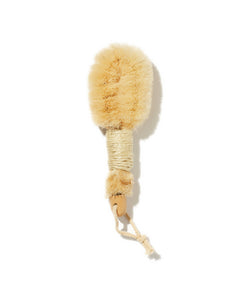
Dry brushing is one of the most effective practices for stimulating superficial circulation, activating lymphatic drainage, and preparing the skin to better absorb active ingredients. It is performed on dry skin, before showering, in upward movements towards the heart. A body brush adapted for daily use helps maintain this ritual without damaging the epidermis.
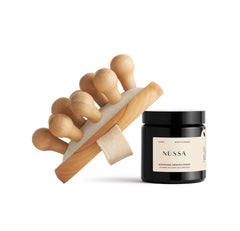
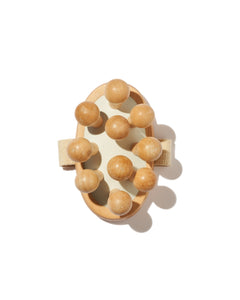
To go further on targeted areas, such as the thighs or hips, an anti-cellulite brush with bristles or relief allows for deeper tissue massage. This type of mechanical stimulation helps break down adhesions and reactivate local microcirculation. To learn all about massage techniques, the article dedicated to thigh cellulite massage details the gestures and protocols to adopt depending on the type of cellulite.
Exfoliating treatments and cosmetic active ingredients
Regular mechanical exfoliation eliminates dead cells, improves skin texture, and stimulates cell renewal. A draining anti-cellulite scrub formulated with draining active ingredients and natural exfoliating agents enhances the action of brushing and prepares the tissues to better receive subsequent treatments. Used twice a week, it becomes a central element of an effective anti-cellulite ritual.
Coffee grounds are one of the most recognized natural active ingredients in this field. The caffeine it contains has a vasoconstrictive and stimulating effect on local circulation, while its exfoliating texture mechanically works on the surface. To discover how to incorporate it into a homemade treatment, the article on coffee grounds for radiant skin offers practical recipes and protocols.
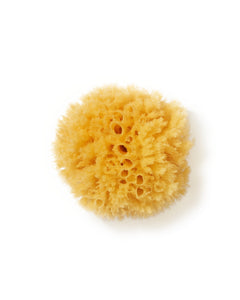
The sea sponge is another little-known ally. Its naturally porous and slightly abrasive structure allows for gentle exfoliation and skin stimulation without irritating the epidermis. It is particularly suitable for sensitive skin or those new to brushing. To understand all its benefits, the article on the usefulness of the sea sponge details its uses.
Fascia: working in depth
Fascial tissue is a network of connective tissue that envelops muscles, bones, and organs. In fibrous cellulite, this tissue becomes less elastic, denser, and contributes to fixing structures in place. Techniques such as self-massage with foam rollers, palper-rouler, or deep massages can gradually soften these adhesions and restore better mobility to subcutaneous tissues.
This work requires time and regularity, but it addresses a dimension that surface treatments alone cannot reach.
The complete routine, key to consistency
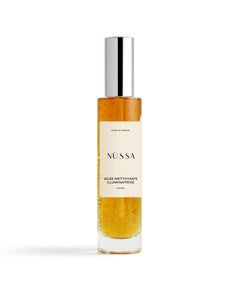
Long-term effectiveness rarely comes from a single treatment but from a combined and coherent approach. The natural and effective anti-cellulite routine from Nussa Cosmetics was designed with this in mind: combining brushing, exfoliation, and draining treatment into a daily, uncomplicated protocol. It is this type of global approach, practiced regularly, that produces visible and lasting results.

What you are never told about cellulite
Cellulite is normal, even on a slim body
It is important to state clearly: having cellulite does not mean being unhealthy, having an abnormal body, or lacking self-care. It is present in women of all sizes, backgrounds, and ages. The idea that cellulite is a sign of lack of willpower or poor lifestyle choices is false and harmful.
The goal of a coherent anti-cellulite approach is not to eradicate what is a female biological characteristic, but to improve comfort, circulation, skin texture, and overall well-being.
Why it comes back, and how to accept it intelligently
Cellulite reappears because its causes, particularly hormonal and genetic, are permanent. Treatments do not "cure" cellulite, they reduce its expression. As soon as habits are interrupted, the effects gradually fade. This is not a failure of the treatments; it is the nature of the phenomenon.
This reality should not be discouraging, but rather reframe expectations: a well-constructed body care routine is not a one-time cure, it is a sustained practice, like sports or a balanced diet.