




Squalane oil: the secret to hydrated, plump, and irritation-free skin

The beauty of truly effective ingredients is that they don't make a fuss. Squalane is the perfect example. Discreet on labels, often confused with its cousin squalene, it has nevertheless established itself as one of the most popular active ingredients among dermatologists and cosmetic experts. Its benefits for the skin are numerous, well-documented, and accessible to all skin types, including the most reactive.
But what exactly is squalane? Where does it come from? And most importantly, what does it really do for your skin? Here's everything you need to know before incorporating it into your skincare routine.
What squalane really is — and why your skin craves it from age 25
Squalane, a molecule your skin already produces
Before being a cosmetic ingredient, squalane is a biological reality. Your skin naturally produces squalene, a lipid molecule that accounts for 10 to 13% of human sebum at age twenty. This lipid plays a fundamental role: it constitutes an essential part of the hydrolipidic film, the protective surface layer that covers the epidermis, prevents transepidermal water loss, and maintains the integrity of the skin barrier.
The problem is that this production declines continuously and inexorably from age 25. By age 50, squalene accounts for only about 2% of sebum. The skin progressively becomes drier, duller, and more vulnerable to dehydration and external aggressions. This is precisely where cosmetic squalane comes in.
Squalane, with an a, is the stabilized version of this natural squalene. Obtained through a hydrogenation process, it retains the properties of the original molecule while being chemically stable: it does not go rancid, is easily formulated in skincare products, and stores well. This makes it a versatile and essential ingredient in modern cosmetics.
Plant-derived or animal-derived squalane: a difference that matters
For decades, squalane was primarily derived from squalene extracted from shark liver, which led to an environmental and ethical controversy that is still ongoing. Fortunately, quality formulations have massively shifted towards plant-derived squalane, extracted from olive oil, sugarcane, or even rice bran.
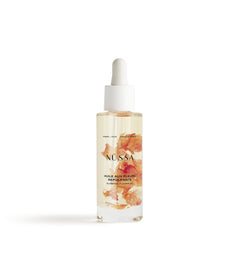
Plant-derived squalane from olive oil is now the market standard in France and Europe. Its lipid profile is the closest to human sebum, which gives it excellent affinity with the epidermis and remarkable tolerance, even on the most sensitive skin. The effectiveness is identical to that of animal-derived squalane, without the ethical or environmental compromises. If you are sensitive to the composition of the formulas you apply to your skin, note that some water-free formulations concentrate plant-derived squalane at particularly high levels, which optimizes its effectiveness.

The benefits of squalane for the skin: what science confirms
A moisturizer of a special kind
To understand the benefits of squalane, you need to understand how it works and how it differs from a classic moisturizing active ingredient like hyaluronic acid. Hyaluronic acid is a humectant: it attracts water molecules from the deep layers of the skin and from the ambient air. It hydrates by filling intercellular spaces and slightly plumping the tissues.
Squalane, on the other hand, is an emollient and a light occlusive. It nourishes cells, softens the stratum corneum, and forms a discreet protective film on the skin's surface that slows transepidermal water loss. It doesn't plump the skin; it nourishes and protects it durably. These two active ingredients are therefore complementary, not competing. If you are looking for deep and long-lasting skin hydration, combining them is one of the most effective strategies. Our guide to face oils helps you choose the oils best suited to your skin profile.
It deeply strengthens the skin barrier
The skin's lipid barrier is composed of interstitial lipids, ceramides, fatty acids, and cholesterol, which act as a cement between the cells of the epidermis. When this barrier is weakened by cold, pollution, exfoliating active ingredients, or aging, the skin feels tight, reddens, and becomes irritated.
Squalane helps strengthen the skin barrier by restoring missing elements to surface lipids. It acts at the level of the epidermis and the stratum corneum, where its biomimetic action is most relevant. This is what studies in cutaneous biophysics call the principle of biomimicry: an ingredient that the skin recognizes as its own is an ingredient it immediately accepts and uses.
Antioxidant properties and anti-aging effect
Squalane also possesses documented antioxidant properties. It neutralizes a portion of the free radicals generated by pollution, UV rays, and oxidative stress—these unstable molecules that accelerate skin aging and contribute to progressive skin sagging.
On dehydration lines, its effect is visible after three to four weeks of regular use. The skin regains elasticity, radiance, and a smoother, plumper appearance. It is not a strict anti-wrinkle active ingredient; it does not stimulate collagen production like retinol or bakuchiol, but by deeply restoring skin hydration, it visibly attenuates their appearance. It is a fundamental, discreet, and constant treatment, whose results are appreciated over time.
A light, non-greasy texture that penetrates without residue
This is the argument that comes up most often in user reviews: squalane penetrates instantly, without leaving a sticky film or oily effect on the skin. Its texture is dry to the touch, light, and leaves the skin soft and smooth as after a good moisturizer, without unnecessary excipients. It blends perfectly with all other active ingredients in your routine and provides an ideal squalane base to improve the absorption of serums or creams applied before or after.

What skin types is squalane for?
This is one of the most frequent questions, and the answer is simple: squalane is one of the rare versatile ingredients that genuinely suits all skin types. Here's why, in detail.
Dry and very dry skin: the most direct benefit
For dry, or even very dry skin, squalane is a particularly suitable solution. It nourishes without weighing down, restores the weakened hydrolipidic film, and offers lasting hydration without the drawbacks of rich vegetable oils, which can sometimes be too dense or have a persistent odor. Its lightness and non-greasy nature make it an excellent alternative to thick creams for skins that suffer from dryness without needing a heavy texture. A few drops morning and evening, applied to slightly damp skin, are enough to observe a marked improvement in skin comfort within the first forty-eight hours.
Combination and oily skin: counter-intuitive, but logical
Many people with oily or combination skin instinctively avoid oils. This is a mistake in the case of squalane. When the skin lacks surface lipids, it often compensates by overproducing sebum. By providing non-comedogenic squalane, this deficiency is compensated without stimulating pores or creating excess. The result is more balanced skin, a less shiny complexion, and refined texture over time. For combination skin, the ideal is to apply squalane only to dry areas, around the eyes, cheeks, temples, leaving the T-zone aside initially.
Sensitive and reactive skin: one of the best-tolerated active ingredients
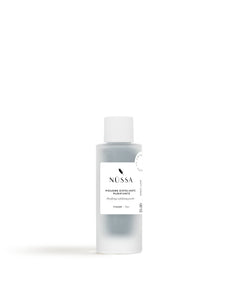
On sensitive skin, squalane is a safe bet. Fragrance-free, free of common allergens, and essential oils, it is an active ingredient that the skin recognizes as its own thanks to its natural affinity with human sebum. It soothes redness, reduces tightness, and helps the skin recover after exfoliating treatments. Used as a recovery treatment after a de-infiltrating scrub, it helps rapidly restore the barrier function weakened by exfoliation. It is also recommended in post-treatment beauty routines for all skin types going through an adaptation phase to powerful active ingredients such as acids or retinol.
Mature skin: compensating for natural squalene deficiency
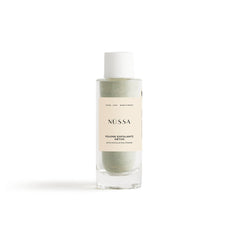
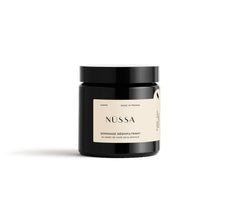
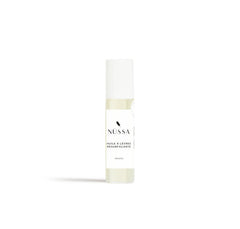
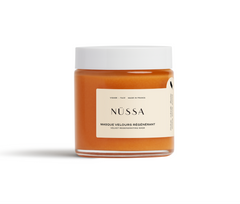
For mature skin, squalane is not just a comfort moisturizer. It is a direct compensatory active ingredient. The decline of endogenous squalene accelerates from the age of forty, contributing to dryness, skin sagging, and loss of skin elasticity. Integrating plant-derived squalane into a daily routine helps slow down this natural lipid depletion and preserve the plump and luminous appearance of the skin. To amplify this effect, Nussa's hydrating regenerating balm mask is an ideal complement to use once or twice a week, in synergy with your daily squalane treatment.

How to use squalane in your routine
Pure or in a formula: what's the concrete difference?
Squalane comes in two forms in skincare. In its 100% pure version, it offers total control over the amount applied and adapts to any existing routine. Integrated into a formula, serum, moisturizer, face oil, or cleanser, it acts in synergy with the other active ingredients present, often at concentrations between 5 and 30%.
Both options are effective. The choice depends on your skin type, the simplicity you seek in your beauty routine, and the intensity of hydration you need. If your skin is very dry or mature, pure squalane applied alone may suffice on certain evenings. If you have combination or sensitive skin, preferring it integrated into a light formula will often be more comfortable.
Application order and recommended techniques
The effectiveness of squalane largely depends on when you apply it. The rule is simple: apply it to slightly damp skin, after your aqueous active ingredients such as a hyaluronic acid serum or toner, and before your moisturizer. This sequence allows squalane to form its protective film over the active ingredients already absorbed, sealing in the hydration provided.
Two to three drops are sufficient for the entire face. Warm them for a few seconds between your palms, then gently press onto the skin rather than rubbing. Squalane penetrates in a few seconds and immediately leaves the skin soft and smooth to the touch. It is suitable for both morning and evening, and its lightness makes it perfectly compatible with the application of sunscreen over it.
Little-known uses of squalane
Squalane is not limited to the face. On chapped lips, a drop applied before bedtime produces visible results within forty-eight hours, often more effectively than a classic balm. On hair ends, it adds shine and lightness without weighing down the hair fiber, and protects against heat during styling. On very dry areas of the body, elbows, knees, heels, it penetrates better than some thick body creams and leaves the skin soft without a sticky sensation.
If you're looking to build a natural and effective routine for your body in addition to your facial care, you'll find complementary ideas in our natural and effective routine.

Squalane and active ingredient combinations: synergies to knowSqualane and hyaluronic acid: the winning pair
This is the most recommended combination, and for good reasons. Hyaluronic acid attracts water to the superficial layers of the skin, and squalane retains it by forming a light occlusive film over it. The two active ingredients act at different levels of the epidermis and reinforce each other. For skin prone to chronic dehydration, this combination is particularly effective in an evening routine.
Squalane and retinol: the ally for transitioning
Retinol is one of the best-documented anti-aging active ingredients, but its adaptation phase is often dreaded. Irritation, flaking, dryness – the first four to six weeks can be uncomfortable. Squalane plays a buffering role here. Applied after retinol, it reduces irritation without inhibiting its effectiveness, unlike heavy occlusive fats that can hinder its penetration. This so-called sandwich technique – light active, then retinol, then squalane – is widely used by dermatologists to facilitate the adoption of this active ingredient on sensitive skin.
Squalane and exfoliating acids: protecting the barrier after exfoliation
After using exfoliating acids like glycolic, lactic, or salicylic acid, the skin barrier is temporarily weakened. Applying squalane in the hours that follow accelerates its restoration, reduces residual redness, and improves overall comfort. It's a simple step that allows you to enjoy the benefits of exfoliation without the usual discomforts.

How to choose your squalane oil
The five things to check on the label
Not all squalanes are created equal. Here's what you should look for before buying. The plant origin must be confirmed, ideally with the mention of the botanical source such as Olea europaea for olive oil or Saccharum officinarum for sugarcane. The formula should be fragrance-free and without added essential oils, especially if your skin is sensitive. The packaging should be opaque or in a pump bottle to protect squalane from light oxidation. The concentration must be significant: a quality squalane serum contains at least 5%, a pure product will display 100%. Finally, vegan certification is a guarantee of transparency regarding the ingredient's origin.
Do you necessarily have to pay a lot?
Pure squalane is not a complex active ingredient to formulate. A bottle of good quality 100% plant-derived squalane generally costs between fifteen and forty euros depending on the brand and volume. Beyond this price, you are paying more for the brand's positioning than for the ingredient itself. However, squalane integrated into a serum or multi-active face oil may justify a higher investment if the complete formula is worth it.