








Morning and evening skincare routine: what routine should you adopt for your skin?

Your morning routine sets the tone for your day. Your evening routine dictates the quality of your night. In between, your skin endures stress, pollution, light, makeup, and the frantic pace of daily life. So, do you really have to choose between a morning routine and a nighttime routine, or can you learn to make them work together?
In the morning, everything moves fast. A few minutes to cleanse your face, apply a hydrating serum, a light cream, sunscreen, before rushing off to work, breakfast in hand, music playing in the background. In the evening, the tempo changes. You slow down. You remove makeup, eliminate impurities, apply a richer treatment, an oil or a night cream, and let your skin repair itself during restorative sleep. These rituals are not just about beauty: they influence energy, motivation, stress management, and even the quality of rest.
Creating an effective facial routine isn't about using many products, but about adopting consistent habits, adapted to your lifestyle, age, and constraints. Morning or evening, each step has a specific role. You just need to understand which one — and why.
Morning routine vs. evening routine: what are the differences for your skin?
The skincare routine does not meet the same needs in the morning and evening. Throughout the day, the skin on your face is exposed to pollution, light, sun, makeup, and external aggressors. The morning routine therefore aims to awaken the skin, eliminate excess sebum, provide hydration, radiance, and sun protection, while preparing the epidermis to face the day.
Conversely, the evening routine takes place at the end of the day, when the skin needs to shed impurities, repair itself, and activate cellular regeneration during restorative sleep. It's a more enveloping ritual, designed to support the circadian rhythm, strengthen the skin barrier, and optimize the effectiveness of night treatments.
Understanding this difference is essential to create a consistent, effective skincare routine adapted to your skin type. To delve deeper into these basics, Nüssa shares many facial care tips to adjust each step at the right time.
How does skin work during the day and night?
Skin's needs in the morning: cleanse, hydrate, protect
Upon waking, the skin has accumulated sebum, perspiration, and residues from the night before. The first essential step is to use a gentle cleanser to achieve clean skin without irritating the epidermis, especially if the skin is sensitive or dry.
Next comes the application of a toner or a light treatment to rebalance the skin, followed by a hydrating serum or a moisturizer. In the morning, the objective is clear: to hydrate, protect the skin, prevent skin aging, and maintain healthy skin throughout the day with a suitable day cream and sun protection.
Skin's needs at night: repair, regenerate, strengthen
At night, the body enters a phase of intense cellular renewal, particularly during REM sleep. The skin becomes more receptive to active ingredients, making it the ideal time for richer treatments: face oil, serum, night cream, or night mask.
This evening routine begins with thorough cleansing to remove makeup and pollution, then continues with targeted treatments. Following the order of steps is fundamental to maximize results, as explained in the guide in what order to do your evening skincare. At night, the skin repairs itself deeply, strengthens its protective barrier, and prepares for a new cycle.

What 3-step natural morning routine should you adopt?
The morning routine doesn't have to be complex to be effective. Its objective is twofold: to cleanse the skin of nocturnal secretions and to protect it from daily aggressions (UV, pollution, cold, dehydration). Three steps are sufficient.
Step 1: Gentle Cleansing
In the morning, the skin has not been exposed to makeup or pollution. A light cleansing is enough to remove nocturnal sebum and residues from night care. Avoid overly harsh cleansers that disrupt the hydrolipidic film rebuilt overnight. Rinse with lukewarm water, never hot.
Step 2: Targeted Serum according to your concern
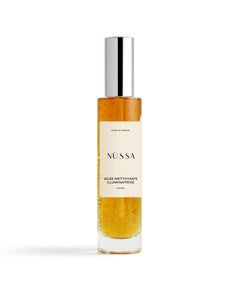
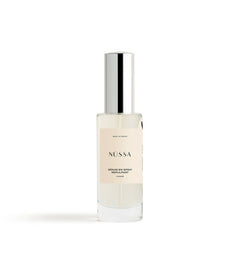
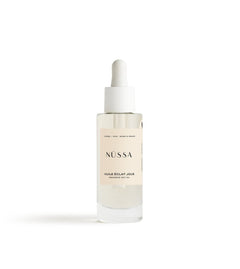
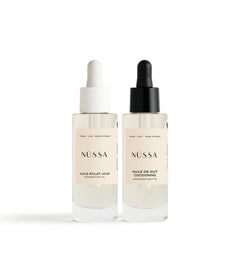
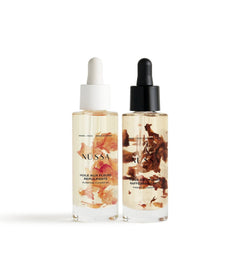
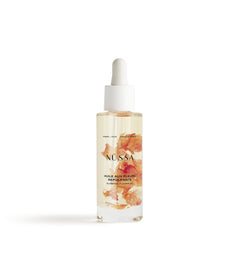
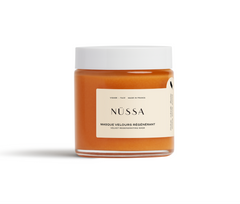
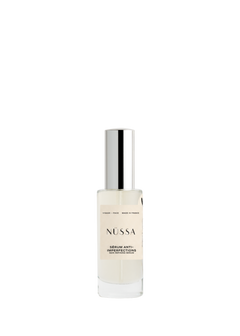
This is the step where you provide the active ingredients your skin needs for the day. Dull complexion: vitamin C or radiance serum. Reactive skin: soothing serum. Dehydrated skin: hyaluronic acid serum. Our unifying spray serum applies in seconds to the entire face and evens out the complexion from the first use. Our radiance day oil can replace or complement the serum depending on your skin type.
Step 3: Sun Protection (non-negotiable)
Sun protection is the most effective anti-aging active ingredient available, and the only one that truly protects against photo-aging. Apply an SPF 30 minimum every morning, even on cloudy days, even in winter. It should always be applied last, after the serum and cream.
Depending on needs, one can supplement with a fine facial oil or antioxidant active ingredients, whose benefits of antioxidants are particularly useful in the morning to combat oxidative stress. Day care offers formulas designed to support the skin throughout the day, while a well-structured facial hydration routine helps to maintain radiance and skin comfort from waking up.
This simple but structured morning routine plays a key role in skin quality, the energy felt upon waking, and the establishment of a beneficial long-term daily beauty habit.
Morning skincare routine order: in what order should you apply your products?
The order of application is not an arbitrary convention: it follows a logic of textures and effectiveness. From lightest to heaviest, from most concentrated to most protective.
Recommended Order:
- Cleanser: removes impurities and nocturnal sebum, prepares the skin to receive treatments
- Toner (optional): rebalances skin pH after rinsing
- Serum: concentrated active ingredients, light texture, penetrates deeply. To be applied on slightly damp skin
- Eye contour: thinner and more permeable area, specific care before cream
- Facial oil (optional, before or after cream depending on its formula): see our complete guide on oil before or after cream
- Moisturizer: seals in the active ingredients of previous treatments and moisturizes lastingly
- Sun protection: always last, forms a protective layer that other treatments should not penetrate
The most frequent order errors:
Applying cream before serum (cream forms an occlusive barrier that prevents serum from penetrating), applying sun protection before cream (dilutes the filter and reduces its effectiveness), using dry oil after SPF (oils can degrade chemical sunscreens).
For a detailed evening routine with the complete order, see: Order of the evening skincare routine
Evening routine: repair, soothe, and regenerate during the night
Why the evening routine is essential for the skin
At the end of the day, the skin on the face has been subjected to numerous aggressions: pollution, makeup, blue light, temperature variations. The primary goal of the evening routine is to eliminate impurities, soothe the epidermis, and prepare the skin for nocturnal cellular regeneration.
Unlike the morning, the evening is not a time for protection but for repair. It is at this moment that the skin best assimilates active ingredients, strengthens its skin barrier, and combats the signs of aging.
The key steps of an effective night routine
A well-constructed night routine relies on a precise order:
-
Thorough cleansing to remove makeup, sebum, and pollution
-
Targeted serum (hydrating, soothing, anti-aging as needed)
-
Facial oil or night cream to nourish, repair, and seal in hydration
Adhering to this sequence determines the effectiveness of the treatments. Night care products are formulated to support the skin during sleep, a key moment for cellular renewal.
What night routine to hydrate your face?
Night is the window of maximum efficacy for hydrating treatments. During sleep, the skin enters its active regeneration phase: cell renewal accelerates, microcirculation increases, and skin permeability improves. Active ingredients applied in the evening penetrate deeper than those applied in the morning, without being exposed to UV, pollution, or cold.
An effective hydrating night routine follows a precise order:
Step 1: Makeup removal and double cleansing
Start with a gentle cleanser to remove makeup, accumulated sebum, and daily impurities. Uncleaned skin prevents hydrating active ingredients from penetrating.
Step 2: Concentrated hydrating serum
Apply your serum to slightly damp skin to maximize absorption. Our plumping spray serum concentrates hydrating and plumping active ingredients to be applied before night oil. To understand everything about the order of application, consult our guide: How to apply a facial serum?
Step 3: Night oil or occlusive treatment
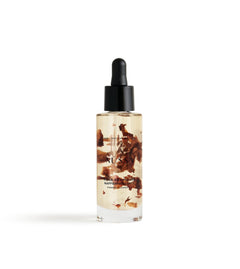
Night oil is the ultimate occlusive treatment: it creates a barrier that prevents water from evaporating during 7 to 8 hours of sleep (insensible water loss phenomenon). Our cocooning night oil combines regenerating vegetable oils with nourishing active ingredients adapted to dehydrated or mature skin. Apply last, after the serum. To understand which oil to choose according to your skin type, consult our guide: Which facial oil?
Step 4: Night mask (2 to 3 times a week)
One to three times a week, depending on your level of dehydration, incorporate a night mask in place of or in addition to your oil. The night mask works for 7 to 8 hours, gradually releasing its active ingredients through slow diffusion. Result upon waking: plumped skin, attenuated dehydration fine lines. Consult our article Dehydration fine lines: causes and solutions if your skin particularly lacks water.

Should you use different products in the morning and at night?
Day vs. Night: opposing skin functions
The skin does not function in the same way depending on the time of day. During the day, it defends itself; at night, it repairs itself. Using the same products morning and evening therefore limits the results.
-
In the morning, prefer light, hydrating, and protective textures.
-
In the evening, opt for richer, repairing, and soothing products.
This distinction allows for precise responses to skin needs and avoids overloading or ineffective active ingredients.
Serum, oil, cream: when and how to use them
Serum can be incorporated into both morning and evening routines, depending on its function. Facial oil is particularly beneficial in the evening to support the skin barrier and regeneration. To select it well, the guide which oil to choose for the face? helps make a choice adapted to each skin type.
Facial oils can be used alone or in conjunction with a serum, while complete routines like hydrating your face make it easier to adopt good habits without multiplying products.
How to create a morning and evening routine adapted to your lifestyle?
Adapt your routine to your skin type and rhythm
An effective routine is not one with the most steps, but one that can be followed regularly. Dry, oily, sensitive, or combination skin: each type requires adjustments, both in terms of textures and active ingredients.
Available time, fatigue levels, lack of sleep, or stress also influence the condition of the skin. Adapting your routine to your lifestyle is therefore essential to maintain healthy skin in the long term.
Integrate the beauty routine into a sustainable habit
Morning and evening, the skincare routine becomes more effective when it is part of a global ritual: regular waking, hydration, sleep quality, exposure to natural light. These elements play a direct role in the biological clock and skin quality.
To go further, facial care tips offer resources to adjust your routine, avoid common mistakes, and build a beauty ritual that is both simple, beneficial, and sustainable.

Morning routine or night routine: do you really have to choose?
Can you use the same products morning and night?
The question often arises: do you need different products for day and night? In reality, it all depends on the function of the product and the skin's biological rhythm.
In the morning, the skin primarily needs protection: hydration, defense against pollution, UV rays, and external aggressions. Textures are generally lighter, designed to be comfortable under makeup and throughout the day.
At night, the skin enters a phase of cellular regeneration. This is when it best assimilates richer or repairing active ingredients. Night products are therefore often more concentrated, nourishing, or targeted (anti-aging, radiance, repair).
Some products can be used morning and night (gentle cleanser, hydrating serum), but others benefit from being reserved for a specific time to maximize their effectiveness.
Minimalist routine or complete routine: which to choose?
There is no universal routine. The right choice primarily depends on your lifestyle, your available time, and your skin's actual needs.
-
Lack of time: A minimalist routine, with 3 to 4 key steps (cleansing, serum, cream, sunscreen in the morning), is often more effective than a complex routine that is poorly followed.
-
Young skin: It mainly needs prevention (hydration, protection, gentleness). There's no need to multiply active ingredients if the skin is balanced.
-
Specific occasional needs: Stress, fatigue, hormonal or seasonal changes can justify a more complete temporary routine (mask, targeted treatment, night oil).
The best routine is one that you can maintain over time, without constraint.
Adapt your morning and night routine to your lifestyle
Skincare routine and lack of sleep: what to do?
Lack of sleep directly impacts the skin: dull complexion, tired features, loss of radiance. In this case, there's no need to change everything: prioritize products that temporarily compensate.
In the morning, opt for light but energizing textures. In the evening, choose products that promote skin recovery, even if the routine is short. Regularity remains more important than quantity.
Adapt your routine according to the season and climate
The skin does not react the same way in winter, summer, or during periods of high heat.
-
Cold, wind, heating: increased need for nutrition and protection of the skin barrier.
-
Heat, sun, humidity: more fluid textures, lighter routine, attention to excess sebum.
Adjusting your routine to the climate avoids imbalances and unnecessary skin reactions.
When to simplify your routine, when to intensify it?
-
Simplify: stable skin, busy period, fatigue, lack of time.
-
Intensify: visible skin changes, accumulated fatigue, loss of radiance, prolonged stress.
An intelligent routine is evolving, not fixed.

Skincare routine: mistakes that prevent you from having beautiful skin
Over-cleansing
Cleansing too often or with overly aggressive products weakens the skin barrier, causing dryness, redness, or excess sebum as a reaction.
Incorrect product order
Applying products in the wrong order reduces their effectiveness. A logical routine always respects the progression: cleanse → treat → hydrate → protect.
Too many active ingredients
Multiplying powerful active ingredients can irritate the skin and create the opposite effect to what is desired. The skin needs consistency, not overload.
Lack of regularity
Constantly changing products or skipping steps prevents the skin from adapting. Consistency is one of the key factors for healthy skin in the long term.