



Does hyaluronic acid hydrate the skin?

Is hyaluronic acid really the savior of your face, or just a marketing promise? Let's be direct: this active ingredient is essential for ensuring optimal hydration of the skin. A true moisture magnet capable of retaining 1000 times its weight in water, it has a hydrating function by capturing existing water and effectively delivering it to the upper layers of the epidermis.
However, to achieve plump results and improved skin texture, everything depends on your routine. A serum that is poorly applied to excessively dry skin can paradoxically cause discomfort. For this beauty product to live up to its promise of youthfulness, it must be used at a specific step in your ritual: on damp skin and sealed with a protective oil or balm.
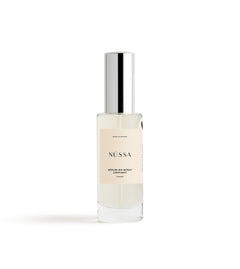
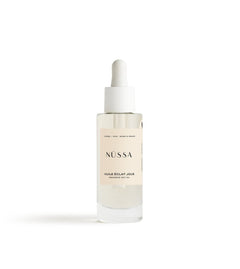
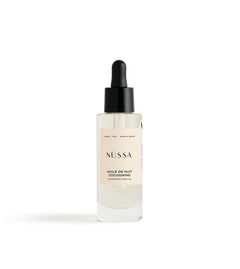
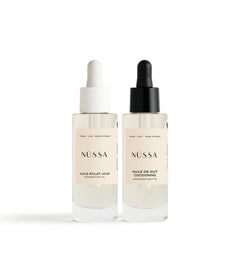
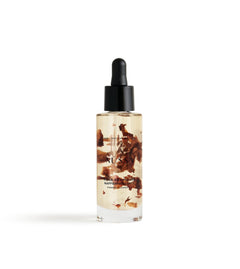
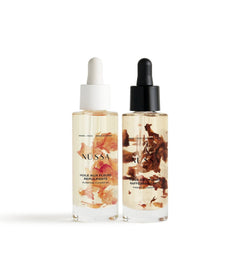
At Nüssa, we have chosen an innovative, 99% natural form to offer your face an anti-aging solution that is effective, sensorial, and respectful of your epidermis.
What is hyaluronic acid?
A molecule naturally present in the body
Hyaluronic acid is a molecule naturally produced by our body. It is found in several tissues: skin, joints, eyes... In the dermis, it plays a "matrix" role by retaining water and ensuring cell cohesion. With age, its production strongly decreases, leading to a loss of volume, elasticity, and the appearance of the first wrinkles.
A fundamental role in skin hydration
A true "molecular sponge," hyaluronic acid retains water in tissues, thus maintaining optimal skin hydration. It strengthens the skin barrier and helps prevent dehydration caused by external aggressions (sun, pollution, cold, oxidative stress). It integrates perfectly into a natural skincare routine, whether as a facial serum, cream, or mist.
Different molecular weights and their effects
There are several forms of hyaluronic acid, depending on their molecular weight:
-
High molecular weight: acts on the surface to form a protective film and prevent water loss.
-
Low molecular weight: penetrates deeper to restart fibroblast activity and stimulate collagen and elastin production.
-
Very low molecular weight: targets the deep layers of the dermis for intensive anti-aging effects.
Nüssa favors hyaluronic acid with optimal bioavailability, integrated into a spray serum formulated for all skin types.

What are the benefits of hyaluronic acid for the skin?
Deep hydration: retaining up to 1000 times its weight in water
This is the most well-known benefit of hyaluronic acid: its exceptional ability to retain water. A single molecule can hold up to 1000 times its weight in water, thus restoring the skin's moisture reserves. This helps maintain optimal hydration levels and prevents skin dehydration, especially in sensitive areas like the eye contour or cheeks.
Well-hydrated skin is more supple, more resilient, and visibly more radiant. It's an essential active ingredient to incorporate into your daily skincare routine, especially for dry or dehydrated skin.
Plumping and filling: wrinkles, fine lines, and loss of volume
Hyaluronic acid acts as a natural filler. By adding volume to tissues, it helps to smooth fine lines and reduce wrinkles, while restoring a plump appearance to the skin. Its effect is particularly visible on areas fragilized by age: nasolabial folds, crow's feet, lip contour...
Thanks to its action in supporting skin tissue, it is also used to counteract volume loss linked to aging. The result: smoother, plumper, younger-looking skin.
Firmness and elasticity: a natural lifting effect
By stimulating the production of collagen and elastin, hyaluronic acid strengthens the dermis structure and combats skin slackening. It contributes to firmer, toned, and elastic skin, creating a true "lifting effect" without surgery.
Used regularly, particularly through a hydrating serum, it becomes a true natural anti-aging ally, perfectly tolerated even by sensitive skin.
Soothing and repairing the skin barrier
In addition to its aesthetic effects, hyaluronic acid has repairing properties. It strengthens the skin barrier, reduces inflammation, and promotes the healing of minor lesions. It is therefore an excellent active ingredient for calming reactive skin prone to redness, or for post-sun exposure care.
It also acts on microcirculation, soothing tightness and discomfort related to dryness or irritation.
Radiance of complexion: improved texture, refined skin grain
By improving the hydration and structure of skin tissue, hyaluronic acid also contributes to a more even and luminous complexion. It refines skin texture, reduces the appearance of pores, and leaves a fresh and radiant look, as if after a good night's sleep.
Result: the face appears visibly younger, clearer, more vibrant.

Integrating hyaluronic acid into your skincare routine
In the morning: hydration booster and protection
In the morning, hyaluronic acid acts as a true hydrating shield. Applied to clean skin, it helps to retain water in the epidermis, preserve elasticity, and protect the skin barrier from external aggressions (pollution, wind, sun, etc.). An essential step to prepare the skin to receive subsequent treatments and enhance the complexion.
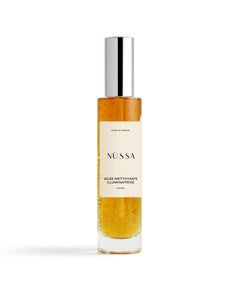
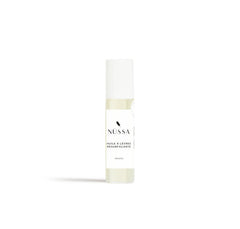
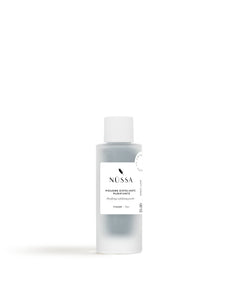
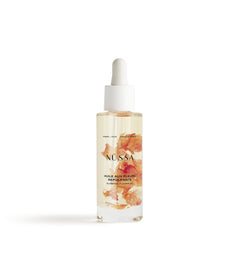
For quick and effective application, opt for a facial serum in mist form, such as Nüssa plumping spray serum, which offers an immediate plumping and fresh effect.
In the evening: repair and anti-aging effect
In the evening, the skin enters a phase of cellular regeneration. This is the ideal time to promote skin tissue repair and reduce the signs of aging. Hyaluronic acid, combined with nourishing and soothing active ingredients, will replump the skin, smooth features, and strengthen the support structure.
Combine it with rich and natural night care to maximize the benefits.
Serum or cream: which to choose for your skin type?
-
Dehydrated or dry skin: combine a serum concentrated in hyaluronic acid with a nourishing cream, for a deep and surface action.
-
Sensitive skin: opt for a natural and minimalist formula, without preservatives or alcohol, to limit the risk of irritation.
Combination with vitamin C or niacinamide: a winning duo?
Hyaluronic acid can be combined with other active ingredients for a global action:
-
Vitamin C: to boost radiance and strengthen antioxidant protection.
-
Niacinamide: to soothe, regulate sebum, and improve skin texture.
These combinations are particularly recommended in an anti-aging skincare routine and allow for optimizing long-term results.

Hyaluronic acid, an essential reference for skin hydration and preventing signs of aging
Naturally present in the body, hyaluronic acid is now a reference ingredient in daily skincare. Whether used in the form of a serum, gel, food supplement, or even by injection, it acts at different levels of the skin to hydrate, plump, and reduce the appearance of wrinkles and fine lines.
Depending on its molecular size, large or smaller, and the quantity applied, it penetrates more or less deeply to fill hollows, attract water, and act effectively on the skin barrier. Serious laboratories offer formulations that are compliant with standards, tested by dermatologists, and sometimes even adapted to specific issues like combination skin with gentle, fragrance-free, and no added bacteria products.
Our advice: favor a simple routine, adapted to your needs, with a well-formulated hyaluronic acid product, with a low molecular weight to hydrate the skin deeply, and a high molecular weight to protect its surface. An effective, natural, and risk-free solution to regain plump, luminous, and visibly smoother skin... from the first few months of use.