


How to apply a face mask? Duration, frequency, and mistakes to avoid depending on your skin type

Applying a face mask seems simple, but its effectiveness entirely depends on the method , the application time., and the skin's ability to absorb the active ingredients deep down. To achieve a visible result (more even tone, tightened pores, intense hydration, or reduction of imperfections), every step counts. A mask, whether it is purifying , hydrating , a sheet mask , clay, cream, or balm, acts as a concentrated radiance booster capable of delivering a real coup d'état when applied correctly.
It is also essential to follow the key steps , choose a texture suitable for your skin type , and avoid mistakes that diminish the effectiveness of the treatment (mask applied to uncleaned skin, too thin a layer, too long or too short application time, etc.). Whether it's a hydrating face mask like Nüssa's or a purifying charcoal mask, the goal remains the same: to meet the skin's needs, while preserving its hydrolipidic film and helping it better fight against pollution, dehydration, and skin fatigue.
Preparing your skin before the mask: essential steps
Poorly prepared skin reduces the effectiveness of the mask by 30 to 50%. Here are the steps in order.
Remove make-up and cleanse
No mask can work properly on skin that still has make-up, sebum, or impurities from the day. Start with a complete cleanse with a gentle cleanser suited to your skin type. Rinse with lukewarm water.
Exfoliate (optional but recommended)
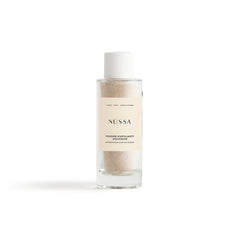
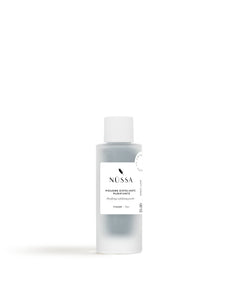
Exfoliation refines the stratum corneum and unclogs pores. The active ingredients of the mask then penetrate up to twice as effectively. Use a gentle exfoliant 1 to 2 times a week, never on the same day if your skin is sensitive. Our gentle exfoliating powder is suitable for all skin types thanks to its micro-gentle texture that respects the hydrolipidic film.
Steam: optional but effective
Lean your face over a bowl of hot water for 2 to 3 minutes, or apply a warm, damp towel. The heat dilates the pores and facilitates the penetration of active ingredients. Particularly useful before a purifying or decongesting mask.
Apply to slightly damp skin
Contrary to popular belief, it is not necessary for the skin to be perfectly dry. Slightly damp skin promotes the diffusion of hydrophilic active ingredients (hyaluronic acid, aloe vera). Dry skin is preferable for clay masks, to avoid dilution of the absorbent active ingredients.
How to apply a face mask: the perfect step-by-step method
Spread the mask in an even layer
Successful application relies on an even layer , neither too thin (little effect), nor too thick (waste, difficulty drying).
Depending on the type of mask :
-
Cream / balm mask : apply a generous layer, avoiding the eye contour .
-
Sheet mask : smooth the sheet to avoid creases and ensure even contact.
-
Purifying clay mask : spread in a thin layer, never until completely dry.
-
Hydrating face mask : massage lightly to promote the absorption of active ingredients.
Always use clean fingers , a brush or a spatula to avoid bacterial contamination.
Remember to extend it to the neck if the product allows.
Respect the application time: neither too long, nor too short
The application time determines the effectiveness of the treatment. Generally:
-
10 to 15 min for a cream or hydrating mask
-
5 to 12 min for a purifying mask
-
15 to 20 minutes for a sheet mask
-
10 min on average for a radiance mask
-
Full night only for night masks designed for this purpose
A mask left on for too long can:
-
dehydrate the skin (clay, charcoal)
-
cause redness or tightness
-
absorb the skin's natural hydration
Nüssa masks, such as the hydrating face mask , are formulated to respect the skin barrier , but must also follow their instructions.

Massage the skin before removing the mask
Just before rinsing or removing the mask:
-
massage the face for 20 to 30 seconds to boost circulation ,
-
focus on wrinkle-prone areas (furrow, before) in addition to anti-sagging massage ,
-
Smooth from the center of the face outwards to promote cellular penetration .
For sheet masks: gently press the excess to optimize absorption .
Rinse correctly or remove according to the type of mask
Depending on the mask formula:
-
Purifying cream mask → rinse with lukewarm water , then pat dry without rubbing
-
Hydrating mask → remove excess with a soft cotton pad or massage until absorbed
-
Sheet mask → never rinse, massage in remaining active ingredients
-
Clay mask → rinse as soon as it starts to dry on the surface
-
Exfoliating mask → remove gently to preserve the hydrolipidic film
Finish with a moisturizing oil to boost the mask's effects and seal in hydration.
A product from Nüssa's natural and moisturizing facial skincare range works perfectly for this final step.

How long to leave a face mask on depending on its formula
The application time is not a detail. Too short, the active ingredients don't have time to penetrate the stratum corneum. Too long, some formulas reverse their effect — dried clay reabsorbs the skin's natural hydration, and a dry sheet mask re-absorbs the active ingredients it just deposited.
| Mask type | Recommended duration | Warning |
|---|---|---|
| Cream/balm moisturizing mask | 10 to 20 min | Can be left on longer without risk |
| Clay/purifying mask | 10 to 15 min max | Remove before completely dry |
| Activated charcoal mask | 15 to 20 min | Do not exceed |
| Sheet mask | 15 to 20 min | Remove before the sheet dries |
| Overnight mask | All night | Do not rinse in the evening |
To learn more about durations based on formulas and skin types, consult our dedicated article: How long to wear a face mask?
Why is applying a face mask correctly essential for the skin?
How does a mask actually work on the epidermis?
Each mask works through light occlusion which improves the absorption of active ingredients: hyaluronic acid for hydration, clay for unclogging, aloe vera for soothing, or vegetable oils for nourishment. This step supports cell regeneration, helps eliminate impurities, reduces excess sebum, and improves skin texture.
Correct application ensures optimal penetration, allowing for a visible effect in just a few minutes: immediate radiance, smoother skin, better hydration, or reduction of shiny areas, as explained in the article dedicated to shiny skin.
Benefits according to mask type
Because there are multiple textures and formulas, the benefits vary:
-
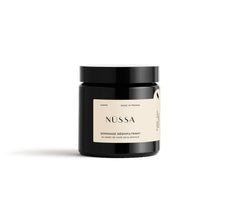
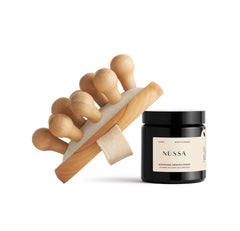
Hydrating mask: ideal for dry, dehydrated skin or after prolonged exposure, rich in active ingredients like hyaluronic acid or vegetable butters. Nüssa's hydrating face mask perfectly illustrates this category.
-
Purifying mask: based on clay, enzymes, or charcoal to eliminate excess sebum, cleanse pores, and reduce imperfections.
-
Anti-aging mask: cream or balm textures, ideal in addition to an anti-wrinkle massage to stimulate micro-circulation.
-
Sheet masks: soaked in active ingredients, perfect for a refreshing effect, intense hydration, or a brighter complexion.
-
Radiance masks: enriched with gentle acids or vitamin C, they immediately restore complexion and luminosity to dull skin.
Each mask can become a very effective treatment if integrated at the right time into your skincare routine, perhaps with a natural face routine from Nüssa duos.

When to use a face mask? The right time to maximize results
In the evening: the most effective time to let the active ingredients work
In the evening, the skin enters a phase of cell regeneration: this is the ideal time to apply a mask and benefit from maximum absorption.
Advantages:
-
the epidermis is more receptive to active ingredients,
-
you avoid immediate exposure to pollution,
-
hydrating or soothing masks work deeply,
-
purifying masks are not disturbed by makeup.
Dehydrated skin can complete the treatment with a cream from the hydrating and natural facial skincare range, to extend the mask's benefits.
In the morning: ideal for waking up the complexion and smoothing features
A light or gel mask can be applied in the morning to:
-
brighten a dull complexion,
-
smooth fine lines,
-
Provide an instant boost before makeup.
Prefer:
-
hydrating masks,
-
radiance masks,
-
express sheet masks (10 minutes max).
During the week: according to the frequency adapted to your skin
Each skin type has its ideal frequency:
-
Dry skin: 2 hydrating masks per week
-
Combination skin: 1 purifying mask + 1 hydrating mask
-
Oily skin: 1 to 2 purifying masks
-
Sensitive skin: 1 soothing mask
-
Dull skin: 1 radiance mask + 1 hydrating mask
To accompany this routine, a balanced duo from the natural face routine can enhance long-term results.
Before an event: immediate "perfect skin" effect
A few hours before an occasion (photo, evening, professional meeting), a hydrating or radiance mask provides a fresh complexion and smoother skin.
Prioritize:
-
gel textures,
-
hydrating face masks,
-
revitalizing sheet masks.
Tip: apply a serum immediately afterwards, following the advice in the applying a serum guide, to enhance radiance.

How often to apply a face mask according to your skin type
The ideal frequency depends on your skin type and the type of mask used. A purifying mask applied too frequently on dry skin unbalances the hydrolipidic film. An insufficient hydrating mask on dehydrated skin does not compensate for water loss.
Oily or combination skin: 2 times a week
Opt for a purifying mask with clay or charcoal to regulate sebum secretion and decongest pores. Combine it with our exfoliating scrub once a week to deeply clear pores and maximize the mask's action.
Dry or dehydrated skin: 2 to 3 times a week
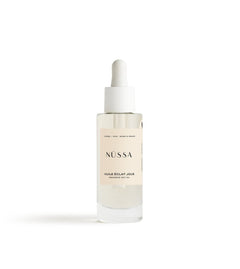
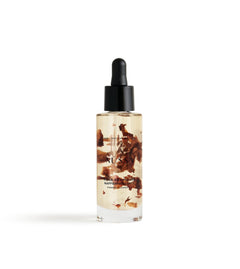
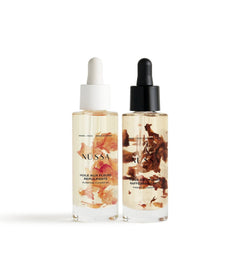
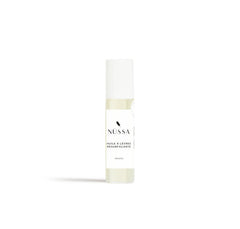
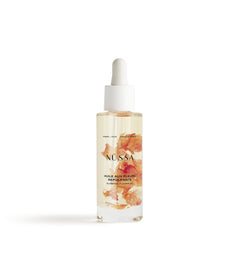
Dry skin quickly loses water and lacks lipids. A rich hydrating mask applied regularly strengthens the hydrolipidic film and compensates for these losses. To amplify the effect, apply a few drops of our plumping flower oil immediately after the mask, on still slightly damp skin. If you suffer from dehydration fine lines, our article Dehydration fine lines: causes and solutions will guide you on complementary active ingredients.
Sensitive or reactive skin: maximum 1 time per week
Sensitive skin tolerates overstimulation poorly. One mask per week, with an alcohol-free, fragrance-free formula based on soothing active ingredients, is sufficient. Avoid clay masks, which can unbalance the skin microbiome on this skin type.
Normal skin: 1 to 2 times a week
Balanced skin does not need to be over-treated. Adapt the frequency and type of mask to the seasons: more nourishing in winter, more purifying in summer.
Which face mask to choose according to your skin type
The most effective mask is the one that matches your skin type and current concern.
Oily or acne-prone skin
Green or white clay mask, activated charcoal, or AHAs. These formulas regulate sebum secretion, unclog pores, and reduce the appearance of imperfections. Avoid masks rich in fatty substances, which would worsen the comedogenic tendency.
Dry or very dehydrated skin
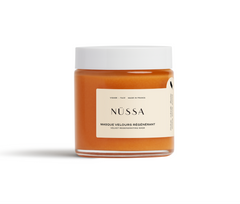
Rich balm mask with hyaluronic acid, vegetable oils (rosehip, argan, avocado), or shea butter. These formulas rebuild the hydrolipidic film and restore lasting skin comfort. Discover the benefits of rosehip oil to understand why this active ingredient is essential for dry skin. Our hydrating regenerating balm mask concentrates these active ingredients in a suitable natural formula.
Dull or tired skin
Mask with vitamin C, pomegranate extracts, or AHA (glycolic acid). These active ingredients stimulate cell renewal, even out skin tone, and restore radiance in a single application.
Sensitive or reactive skin
Mask with oats, aloe vera, or soothing oils (calendula, chamomile). Avoid formulas with alcohol, high concentrations of AHAs, and synthetic fragrances.
Mature skin
Plumping mask with hyaluronic acid, natural retinol (bakuchiol), or peptides. These active ingredients support collagen synthesis and reduce visible signs of skin sagging. Consult our guide on how to firm facial skin for a comprehensive approach.

What to do after the mask: rinsing, serum, and cream
The post-mask period is the most underestimated window of opportunity in a routine. The skin is in a state of maximum receptivity: softened stratum corneum, open pores, temporarily permeable hydrolipidic film. What you apply within 5 minutes of rinsing penetrates much more effectively than under normal conditions.
Rinse with lukewarm water
Never with hot water, which dilates vessels and alters the hydrolipidic film. Gently massage the face with your hands to remove mask residues. Pat dry with a clean towel without rubbing.
Special case: a sleeping mask is not rinsed off in the evening. Just do your usual morning rinse.
Toner (optional)
An alcohol-free lotion applied with a cotton pad or patted in with the hands rebalances the skin's pH, slightly altered by tap water, and prepares the skin to absorb subsequent treatments.
Serum first
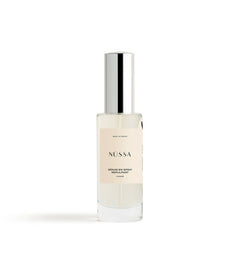
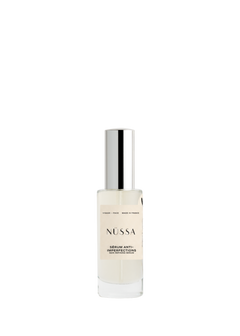
Texture rule: from thinnest to thickest. Serum is applied before cream, on still slightly damp skin to maximize penetration. Our plumping spray serum or our unifying serum are ideally applied at this stage. To understand everything about the order of application of treatments, our article Oil before or after cream details the complete logic.
Cream or oil to seal
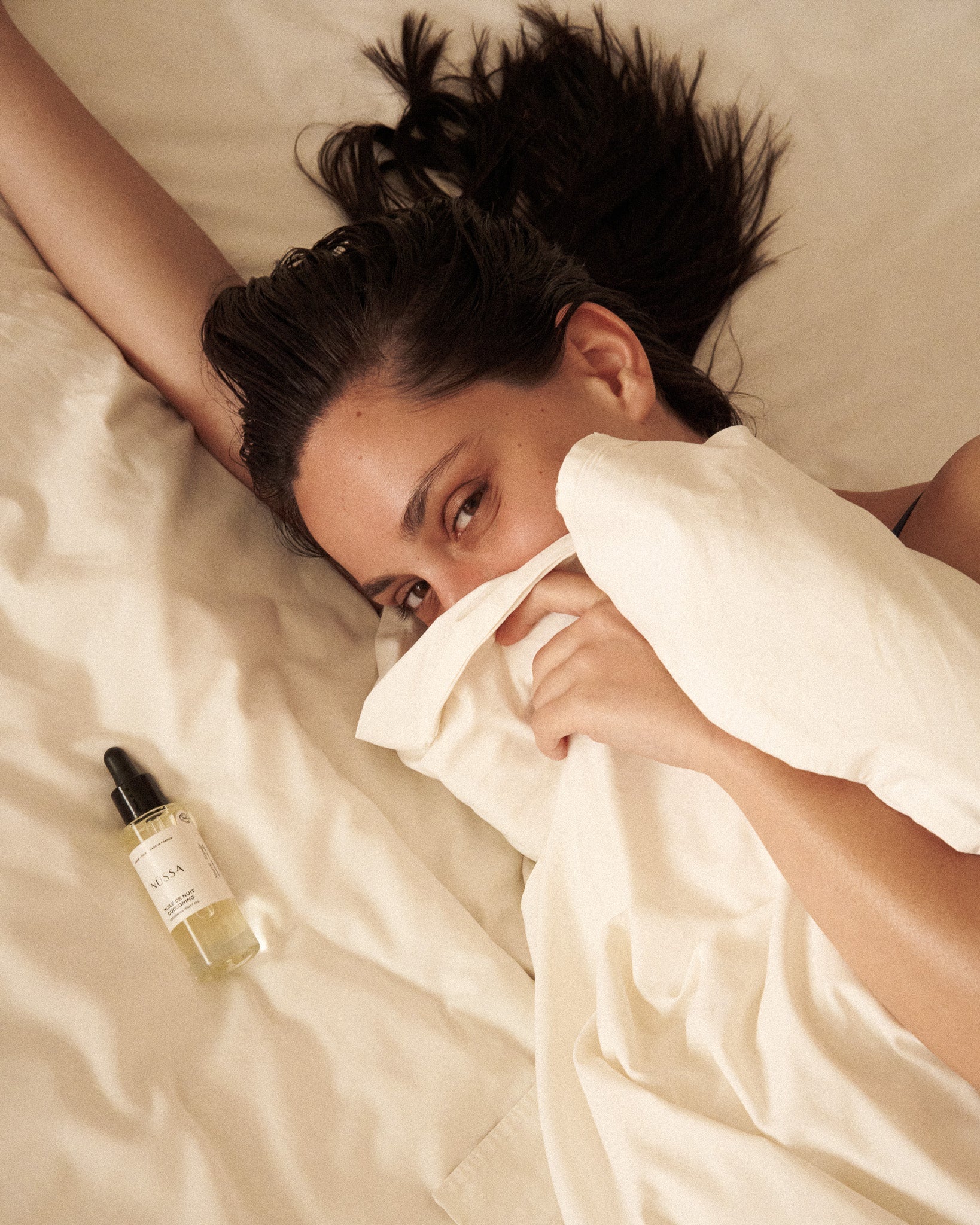
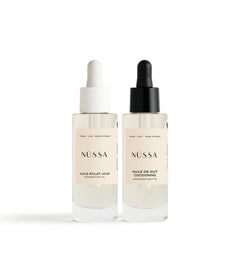
Finish with your usual treatment to create an occlusive barrier that retains the active ingredients of the mask and serum in the deeper layers. In the evening, our ocooning night oil advantageously replaces classic night cream.
The 5 mistakes that reduce the effectiveness of your face mask
Mistake 1: Applying the mask to uncleaned skin
Makeup, sebum, and impurities form a physical barrier between the mask's active ingredients and your epidermis. The mask remains on the surface. Always cleanse beforehand.
Mistake 2: Allowing clay to dry completely
Hardened clay no longer absorbs sebum; it starts absorbing your skin's natural protective lipids. Result: tight skin, damaged hydrolipidic film. Remove the mask as soon as it feels slightly taut, before it dries out.
Mistake 3: Not respecting the application time
10 minutes for a hydrating mask is not 30 minutes. The formula was designed to diffuse its active ingredients within a specific time. Beyond that, some active ingredients evaporate, others saturate the skin without additional benefits, or even disrupt the skin's balance.
Mistake 4: Applying the mask to the eye contour area
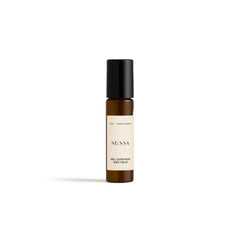
This area is much thinner than the rest of the face and particularly permeable. A mask not formulated for the eye contour can cause irritation, swelling, and reactions. Always leave a 1 cm margin around the eye.
Mistake 5: Using a mask unsuitable for your skin type
A purifying clay mask on dry skin will worsen dehydration. A very rich mask on oily skin will encourage the appearance of imperfections. The most effective mask is the one that suits your skin, not the trendiest or highest-rated online.

Written by Nüssa Cosmetics